• Welcome to the Fantasy Writing Forums. Register Now to join us!

The Bechdel Test

Status
Not open for further replies.
I don't see a problem with including characters, but I disagree that we should need to include GOOD characters. I think there's just as much to say for equality that we have BAD characters of different races, sexual orientation and gender. White heterosexual males have been allowed to be petty, shallow creatures for generations, isn't it about time that we extended this to everyone?

While I think you might be misunderstanding what "good" means in this context, you bring up an important point. Complex characters don't necessarily need to be heroes.
 

Mindfire

Istar
haha, so I was trying to avoid saying the other way around because in a different thread saellys had taken umbrage. It's not that a female character being complex is necessarily "enlightened", but that no one cares if a male character isn't (but as saellys would say, even though guys (maybe I'm generalizing too much, even though *I*) don't care if males are objectified or stupid or unenlightened, when a girl isn't it is cited as being sexist. Where as, in order for a female character to be considered OK by (insert group here), they MUST be enlightened.

I think I get what you're trying to say, but I think you should rephrase this to make it more clear.
 
While I think you might be misunderstanding what "good" means in this context, you bring up an important point. Complex characters don't necessarily need to be heroes.

Hmm, I completely agree, but also, characters shouldn't *need* to be complex. Sometimes, even if they are complex behind-the-scenes, it doesn't need to be shown to the reader unless it adds to the story.

I think I get what you're trying to say, but I think you should rephrase this to make it more clear.

I am saying we are OK with one-dimensional white heterosexual male characters of dubious role-model-shipness (probably not for a main character, but not every background character needs to have a, well, a background), but the same is immediately labeled as bigotry or prejudice if the character is a non-white or non-heterosexual or non-male character. In fact, as Feo pointed out, even if it is a complex character, if the character is of dubious role-model-shipness, then it will be labeled as a form of bigotry or prejudice.

Now, I understand the argument that there is this prejudice out there in society for non-white, non-heterosexual or non-male people and not so much for white & heterosexual & male, but the holding non-white, non-heterosexual or non-male characters to higher standards on the basis of their non-white, non-heterosexual, or non-male-ness is itself a form of prejudice.

Instead of decrying what I am describing as a "bad" character (read "bad" as morally-dubious or one-dimensional or both), I do agree we need more positive examples. I do not think everyone needs to be represented. At the end of book 2 in my series, the one dragon finds out that the main character is NOT a dragon, and this is a major issue for him because he felt that he needed someone of his race to believe in. I hope he figures out that he is able to look to other "kinds" for role models. Much like in the example cited early on in this discussion in that TED video. The little girl did not look up to Princess Leia (or at least, not the most), she looked up to Obi-Wan, because Obi-Wan was who she identified with the most, and the dad was thrilled because he viewed Obi-Wan as a leader. She didn't look up to Princess Leia because she was a girl or beautiful or a princess, which are rather superficial ways of looking at a person.

Disclaimer: In all these examples of one-dimensionality, I am assuming that this representation is the author's choice of presenting the story the best it can be.
 
Last edited:

T.Allen.Smith

Staff
Moderator
... there seems to be a recurrent assumption that just having minority characters means saying something political.
I don't think anyone is saying that. I haven't read anyone saying that a minority character equates to a political message just by being in the story. The idea that writers NEED to include them, because society needs awareness, is what many spoke out against.
 
Unless I missed something Saellys said, no one here has said that writers need to include minority characters in order to have a good story. As best I can tell, Saellys has said that including minority characters makes a story better whether it was previously good or bad (a statement I don't agree with), and I've said that minority characters don't change the quality of most stories (and potentially earn a few brownie points.)
 

T.Allen.Smith

Staff
Moderator
I feel compelled to make the distinction because there seems to be a recurrent assumption that just having minority characters means saying something political. It's true that some people will read in political assumptions, but if you'd tell people to take a hike for criticizing your white male characters, you could just as easily tell them to take a hike for not letting your albino lesbian Eskimo or whatnot slay dragons in peace.
I wasn't talking about what Saellys wrote. I fully understand her views. I am questioning your claim of an assumption stating that some responders think "just having minority characters means saying something political".

I haven't seen anyone making this claim.

Edit: I want to make clear this is not intended as an attack on your statement. It is a request for clarification. Up until this assumption was stated, I felt that the involved parties were nearing an understanding. However, your stated assumption made me pause, thinking that a lot of misunderstanding remained.
 
Last edited:
Then I'll drop that avenue of discussion.

Anyway, I think we're talking past each other. Let me try another tack:

There's supposedly a cliche of good guys in Westerns riding white horses. I don't read enough Westerns to be sure of that. But if I read a hundred Westerns, and the good guy rode a white horse in every single one, I'd kind of wonder at it. I wouldn't get offended or anything, but if I wrote a Western, I'd probably put the good guy on a brown horse, just to make things a little different for a change.

I keep talking about representation, because that's the hot-button issue, and I do care about to some degree. (As I said before, an entire shelf full of books about white men merits a tiny little "hrm?") But if I'm honest, for me it's just mostly a matter of wanting a few brown horses.

(That came out more racially charged than I intended.)
 
Last edited:

T.Allen.Smith

Staff
Moderator
Yes, I understand where you're coming from. I do. Although I don't think the analogy is a good one... Don't worry, I'm not judging ....it's awfully late.

The color of horses doesn't change reader impression. The color of a cast member might. If I am telling a story about a culture that mirrors medieval Europe and there is an African or an Asian involved...that requires explanation. The color of a horse does not. Therefore, if I am to include an African or an Asian, it needs to make story sense.

Yes, I do realize in fantasy, we have more cart-blanch than other genres. However, there are limits set in place within the world the author deems appropriate. Perhaps the story requires warring parties that pray to the same god, that look the same on the surface. Maybe there is no room in a close tale where outside races aren't needed. "Women are everywhere!" you might say (a fact that I am truly grateful for). Still though, their role, as well as a man's, entirely depends on the author's vision of world culture.

I believe that generalizations have lead to some misunderstandings on this topic. Therefore, it's time for specifics.

Allow me to offer an example from my current WIP. The only reason I do this is because the comments here, in this thread, have caused me some reflection. I'm interested in how the involved parties might view characters in my current story... This is one of 5 POVs.

An adolescent girl has a gift for magic in a world where magic has been relegated to myth and legend. Her mentor is a woman from another realm that would resemble our real-world east-Indians. This woman comes from a land where women are treated as chattel (similar to the adolescent's culture, where women are subservient, but not as zealously enforced). Her ruling father has sent her away because of an affair with a commoner that she loved (not seen in the story, only spoken).

This foreigner is a rare magic user. So is the adolescent girl who lives in a culture similar to medieval Europe. The chances of two such individuals ever coming into contact are infinitesimal. Their goals, as characters in the story, are at first to survive when they are made destitute. Later their goals change to gaining an understanding of magic together (because it is so exceedingly rare - low magic story). Eventually this takes them down a very dark road as they discover that the nature of magic is not what they expected. The adolescent eventually becomes the most powerful character in the story, inciting a rebirth in magic but also reigniting a costly price for power. Neither are ever romantically involved with other characters. Their combined storyline is the basis for the entire tale (even though this is hidden for awhile).

I'm not interested in any comments referring to a magical savage/native stereotype.... I feel strongly that the writing shows the mentor character as surpassingly refined among other things. She is a mentor in manner, presentation, education, being a lady, etc.

There was a time, during Act 1, that I considered a blossoming lesbian relationship between these two. I chose against it, only because I didn't want to detract from the importance of the magic... It is the start of a magic reawakening in my story (Story first ideal).

How would this be perceived by the proponents of this test?
 
Last edited:

saellys

Inkling
What I question is this idea that "realistic" female characters are somehow enlightened, or that the reader cares about a particular conversation that the female characters have.

Wow. I had to read this five or six times to make sure I hadn't missed something that would make this less outright offensive.

The short answer (and I'm going to try real hard to stick to short answers from now on) is that if you don't care, your readers won't. That goes for every part of your story, but if you really don't care about what your female characters say to each other in an otherwise well-written story full of developed characters, your readers will know.

As for enlightened, I don't know where that came from. Realistic characters are just realistic. You want your characters to seem like real people, yes? You don't need to make your female or minority or transgender or whatever characters more across-the-board morally "good" or smart or magical or skilled in battle than your male characters. You do need to make them as developed as your male characters (adjusting for such things as hero vs. background character, of course). Again, if you don't care enough to make that happen, your readers will notice.

How would this be perceived by the proponents of this test?

It sounds like a great story. As I said way back in this thread, it's totally possible to have a patriarchal/misogynistic setting and still project an impression of female empowerment. I love seeing examples of girls with female mentors, too. Was that what you were asking?
 
Last edited:

Mindfire

Istar
If I am telling a story about a culture that mirrors medieval Europe and there is an African or an Asian involved...that requires explanation.

Not necessarily.

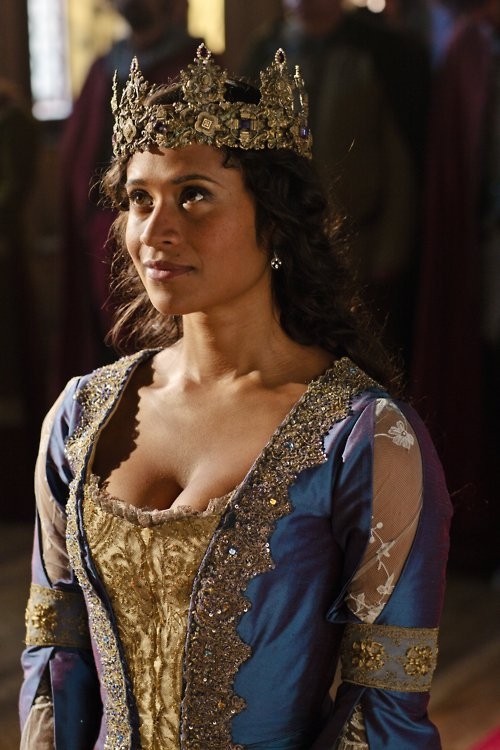
Guinevere-guinevere-28871776-500-750.jpg


Black Queen Guinevere from Merlin says hi. :D And she was an awesome character, too.
 

saellys

Inkling
Black Queen Guinevere from Merlin says hi. :D And she was an awesome character, too.

I never watched much Merlin, but I absolutely loved that neither the show nor its fans made a big deal out of this. Everyone rolled with it. As opposed to, say, some of the reactions I saw to casting Lucy Liu as Joan Watson on Elementary, which included such whoppers as, "Genderswap I can understand, but Asian?!" and, "Watson is A MAN." Actual comments there. Often from Sherlock fans who were righteously indignant that someone else was adapting a public domain character to the modern era.

There was a similar reaction a few years back when Katee Sackhoff got cast as Starbuck in the Battlestar Galactica reboot. :rolleyes:
 

Mindfire

Istar
Btw, this is the photo that was supposed to show up. If a mod can do a little edit to fix that, I'd be grateful.

guinevereguinevere28871.jpg
 

Mindfire

Istar
I never watched much Merlin, but I absolutely loved that neither the show nor its fans made a big deal out of this. Everyone rolled with it. As opposed to, say, some of the reactions I saw to casting Lucy Liu as Joan Watson on Elementary, which included such whoppers as, "Genderswap I can understand, but Asian?!" and, "Watson is A MAN." Actual comments there. Often from Sherlock fans who were righteously indignant that someone else was adapting a public domain character to the modern era.

I'd say Merlin is a great example of diversity done well. It doesn't feel forced or contrived and the female and minority characters all get appropriate character development. Plus it was politics-free. This is how it ought to be done. As for Elementary, people were trying to find anything to nitpick about it because they feared it would copycat Sherlock. But the show is actually moving in a different direction and is good in its own right.
 

saellys

Inkling
As for Elementary, people were trying to find anything to nitpick about it because they feared it would copycat Sherlock. But the show is actually moving in a different direction and is good in its own right.

Definitely--it's more of a police procedural that happens to have Sherlock Holmes in it than a straight adaptation of Doyle's stories. I prefer it to Sherlock now because Elementary handles topics like fluid sexuality (Sherlock identifies as asexual, but his body's got needs), mental health ("You loaded him like a weapon"), and addiction (all of Sherlock's time in recovery and his whole relationship with Joan) tenfold more gracefully than Sherlock. And it passes Deggans and Bechdel! Frosting.
 

T.Allen.Smith

Staff
Moderator
As I said way back in this thread, it's totally possible to have a patriarchal/misogynistic setting and still project an impression of female empowerment. I love seeing examples of girls with female mentors, too. Was that what you were asking?

Yes thank you. I must have missed that before.


Not necessarily.

Black Queen Guinevere from Merlin says hi. :D And she was an awesome character, too.
Interesting...though I've never watched this show. I wonder if the difference in visual media vs. written matters here.

I still feel as if I'm going to include a PoC character then that requires some explanation in an otherwise Nordic looking world.
 

saellys

Inkling
I still feel as if I'm going to include a PoC character then that requires some explanation in an otherwise Nordic looking world.

I sympathize with this. Like I said, my The Stone Front co-writers and I are adding more diversity to our world in the second draft, and we're trying to back that up with family trees and histories of migration that are internally consistent. Very few of those details will end up in the book as anything more than a passing mention in dialogue or description here and there, but we still want the structure in place. It's part of our continued worldbuilding process.

I get that you weren't necessarily saying this, but the implication I'm seeing from that statement and others like it in this thread is "It would require explanation, so I might as well keep my Nordic-looking world Nordic-looking." I don't see this as valid when said by anyone who actually enjoys writing. It smacks of a lazy excuse for upholding the status quo.
 
I wasn't talking about what Saellys wrote. I fully understand her views. I am questioning your claim of an assumption stating that some responders think "just having minority characters means saying something political".

I haven't seen anyone making this claim.

I don't think anyone is making this claim outright, but do we agree that purposefully including minority characters is saying something political?

Wow. I had to read this five or six times to make sure I hadn't missed something that would make this less outright offensive.

The short answer (and I'm going to try real hard to stick to short answers from now on) is that if you don't care, your readers won't. That goes for every part of your story, but if you really don't care about what your female characters say to each other in an otherwise well-written story full of developed characters, your readers will know.

As for enlightened, I don't know where that came from. Realistic characters are just realistic. You want your characters to seem like real people, yes? You don't need to make your female or minority or transgender or whatever characters more across-the-board morally "good" or smart or magical or skilled in battle than your male characters. You do need to make them as developed as your male characters (adjusting for such things as hero vs. background character, of course). Again, if you don't care enough to make that happen, your readers will notice.
If it was offensive then please report it, I'm not sure what was offensive, but I will edit the post if moderators ask me to. I don't want to hurt anyone's feelings.

If their conversations don't matter for the plot, then why show them? I am more concerned with the overarching plot of the story and conversations between characters that do not advance the plot or the relationships/development of characters do not matter and should not be shown.

Saying that I should make an effort to have conversations that do matter between "minority" characters is (1) ignoring that the story has a life of its own, (2) that artificially doing this should be unnecessary, and (3) that consciously choosing to do this IS a form of *-ism.

My novel does not pass the Bechdel Test. Was I offended? No. Was I surprised? Yes. Did I care after realizing that it doesn't? No. Because those conversations happen behind the scenes and aren't necessary to show for the story itself, which is predominantly a buddy-coming-of-age-action-adventure. Will future novels in the series pass the Bechdel test? Yes, but not because I artificially forced them to, but because the focus in the coming novels shifts from the development of the protagonist in Book 1 to the development of the world in Book 2.

Not necessarily.

Guinevere-guinevere-28871776-500-750.jpg


Black Queen Guinevere from Merlin says hi. :D And she was an awesome character, too.

To be fair, they also removed her position in the legend from noblewoman and changed her to a serf or thrall (they call it a servant, but this is a feudal society we are talking about here...).

I get that you weren't necessarily saying this, but the implication I'm seeing from that statement and others like it in this thread is "It would require explanation, so I might as well keep my Nordic-looking world Nordic-looking." I don't see this as valid when said by anyone who actually enjoys writing. It smacks of a lazy excuse for upholding the status quo.

It smacks to me of being true to the vision of the setting and remaining honest to the work. I feel that bending to societal pressure to include these things would be no different than bending to the societal pressure to NOT include them. If you're doing something like that deliberately, then I find it distasteful.
 
Last edited:

T.Allen.Smith

Staff
Moderator
I get that you weren't necessarily saying this, but the implication I'm seeing from that statement and others like it in this thread is "It would require explanation, so I might as well keep my Nordic-looking world Nordic-looking." I don't see this as valid when said by anyone who actually enjoys writing. It smacks of a lazy excuse for upholding the status quo.

Not what I meant. I'm saying that in the cases where I have PoC characters in an otherwise white world, I've felt the need to explain that presence.

It doesn't take a massive amount of explanation, I'd agree with that point. But, depending on the world, it may take more than in another.
 
Last edited:

Mindfire

Istar
I don't think anyone is making this claim outright, but do we agree that purposefully including minority characters is saying something political?

I don't agree. Just having minority characters does not make a political statement. It's a bit more nuanced than that. Now whether people will infer a political statement on their own is another matter.

To be fair, they also removed her position in the legend from noblewoman and changed her to a serf.

Honestly, I think that change improved the story, so I'm fine with it.
However, if we did want to start dipping into political implications, I'd say the Arthur/Gwen romance is a subtle criticism of parents who don't want their children to date across class/ethnic lines.

It smacks to me of being true to the vision of the setting and remaining honest to the work. I feel that bending to societal pressure to include these things would be no different than bending to the societal pressure to NOT include them. If you're doing something like that deliberately, then I find it distasteful.

I think there's a difference between bending to societal pressure and doing something different because you want to. To put it another way, if you read a book where the author did include people of color in a Nordic-type setting with no explanation, would you be put off by it?
 

T.Allen.Smith

Staff
Moderator
...if you read a book where the author did include people of color in a Nordic-type setting with no explanation, would you be put off by it?
Put off by it? No

However, it may bring rise to certain questions. Why is this person in this setting? Where are they from (assuming only one or a few)?

Further, I'd expect that presence, if there is only a small number of this minority in a land that seems foreign to them, to have some significance to the plot.
 
Status
Not open for further replies.
Top